

Last Updated: August 24, 2026
Finding the best road bikes for long rides means navigating a crowded field where marketing promises rarely match what your body feels after hour five in the saddle. At Playtri Sarasota, we work with cyclists and triathletes daily, helping them match the right bike to their goals, anatomy, and the specific demands of long-distance riding. This guide cuts through the noise and focuses on what actually matters: geometry, compliance, tire clearance, and the fit details that separate a bike you love from one you dread.
Road bikes for long rides are distinct from race bikes. The geometry is more relaxed, compliance features reduce fatigue over hours, and tire clearance accommodates wider rubber that smooths road buzz.
An endurance road bike prioritizes rider comfort and sustained efficiency over multiple hours, rather than optimizing purely for aerodynamics or sprint power.
Endurance bikes have a taller head tube and shorter reach, placing the rider in a more upright position that reduces strain on the neck, shoulders, and lower back over long hours. The longer wheelbase improves stability at speed and on descents, allowing the bike to track predictably when fatigued.
Road buzz is cumulative. Minor roughness at mile 10 becomes genuine fatigue at mile 60. Vertical compliance absorbs road vibration without sacrificing lateral stiffness for power transfer. Manufacturers achieve this through carbon fiber layup tuning, flex-zone seatstays, decoupled seatposts, and mechanical suspension systems.
Modern endurance road bikes accept tires from 32mm to 40mm wide. Wider tires run at lower pressure, creating a larger contact patch that absorbs road irregularities more effectively than narrow, high-pressure tires. Disc brakes are now standard, providing consistent stopping power regardless of weather and allowing the wider tire clearance that defines the category.
Stack is the vertical distance from the bottom bracket to the top of the head tube. Higher stack places handlebars higher, reducing forward lean. Reach is the horizontal distance from the bottom bracket to the top of the head tube; shorter reach means less extension. Head tube angle affects steering precision; endurance bikes use a slightly slacker angle for improved stability. Wheelbase is the distance between wheel axles; longer wheelbase improves straight-line stability.
Professional bike fitting is the single most effective upgrade a long-distance cyclist can make. A fit session analyzes your body's dimensions, flexibility, and movement patterns, then adjusts saddle height, fore-aft position, handlebar height, reach, and cleat position to match your anatomy.
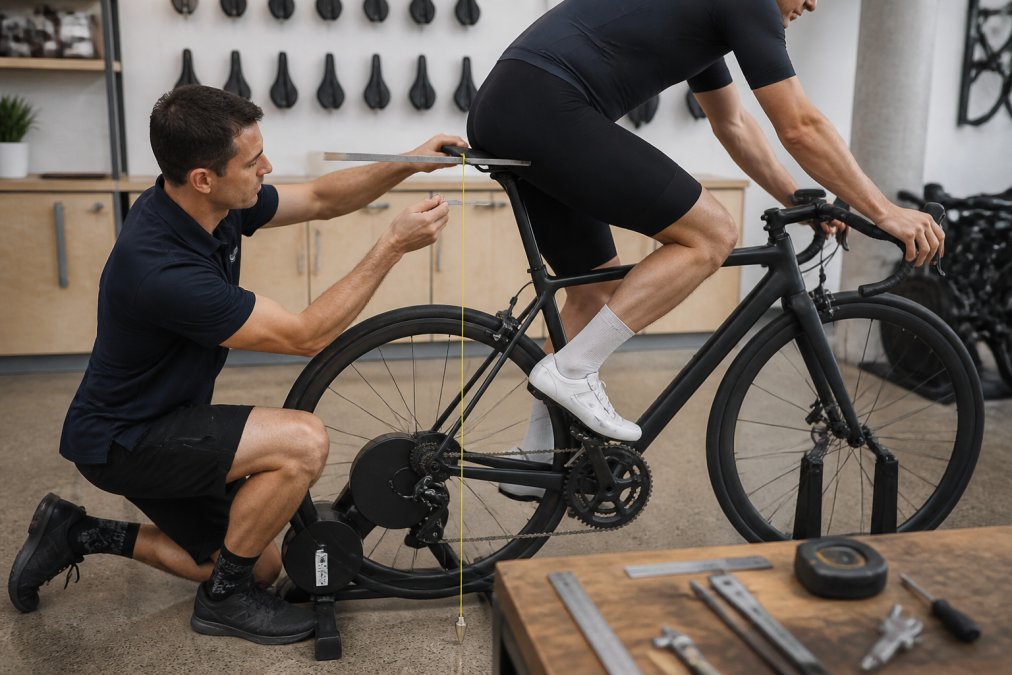
According to USA Cycling's guidelines on bike fitting and injury prevention, improper saddle height is among the most common contributors to knee pain in cyclists. A poorly fitted bike forces your body to compensate with inefficient muscle recruitment patterns that accelerate fatigue.
Nutrition strategy separates riders who finish strong from those who limp home depleted. For rides over 90 minutes, consume carbohydrates in the range of 60-90 grams per hour (peer-reviewed research). Start consuming carbohydrates within the first 30-45 minutes, even before you feel hungry.
Electrolyte replacement matters as much as carbohydrate intake on rides exceeding two hours. Sodium loss through sweat affects fluid retention and muscle function. Sports drinks, gels with electrolytes, and salted nuts all serve this function.
The right endurance road bike depends on your road surface, budget, and body's specific needs. For most riders doing mixed road surfaces, the Cervelo Caledonia is the strongest all-around choice. Riders regularly encountering rough chip-seal should prioritize the Cannondale Synapse. Budget-conscious riders wanting maximum specification should look at the Scott Addict 10 Disc and Bianchi Infinito. For ultra-distance athletes needing race-level performance with endurance geometry, the Cervélo Caledonia-5 is the correct choice.
The best road bikes for long rides perform significantly better when properly fitted to the rider. The geometry and compliance features that make these bikes exceptional are only fully realized when saddle height, reach, and cleat position are dialed in for your specific body.
A: On rides over 100 miles, endurance road bikes often deliver comparable average speeds to race bikes for most cyclists. The upright riding position and vertical compliance reduce fatigue, so you sustain power output longer. A race bike's aggressive geometry may feel faster on short efforts, but the efficiency advantage erodes as hours accumulate. For all-day comfort without a significant speed penalty, endurance geometry is the practical choice for the majority of long-distance riders.
A: The most important features are endurance geometry (taller head tube, longer wheelbase), vibration damping through carbon layup or suspension systems, tire clearance of at least 32mm, disc brakes for reliable stopping power in varied conditions, and a drivetrain with a wide gear range. Tubeless-ready wheels reduce rolling resistance and flat risk. Frame material matters too: carbon frames absorb road buzz far better than aluminum, reducing arm and back fatigue over several hours of riding.
A: A professional bike fitting aligns saddle height, reach, stack, and cleat position to your individual anatomy. Small misalignments that feel minor at 30 minutes become painful at hour three. Knee pain, lower back tightness, and hand numbness are frequently traced to incorrect saddle height or a reach that forces you to overextend. A fit session corrects these before they become chronic injuries, and the adjustments apply whether you're riding 40 miles or 140 miles.
A: Endurance road bikes prioritize speed and compliance on paved surfaces, with geometry optimized for tarmac efficiency. Gravel bikes use a slacker head tube angle, longer chainstays, and wider tire clearance (often 40mm or more) to handle unpaved surfaces. Both offer a more relaxed position than race bikes, but endurance road bikes are noticeably faster on pavement. If your long rides stay on roads, an endurance road bike is the better choice. Mixed-surface routes favor a gravel bike.
A: Bikes used for long rides accumulate wear faster than those ridden casually. Clean and lube your drivetrain every 150 to 200 miles, check brake pad wear monthly, and inspect tires for cuts or embedded debris after each long ride. A full service, including cable tension, bearing checks, and wheel truing, is appropriate every 1,500 to 2,000 miles or at least once per season. Riders logging high mileage in wet or sandy conditions should service more frequently.

Leave a comment