

Quick Summary
Power meter pedals measure the force you apply through each leg and convert it into watts, without changing your bike's drivetrain. The Garmin Rally RS210 is the top pick for riders who want swappable pedal bodies, while the 4iiii Precision 3+ suits riders wanting long battery life. Quarq's DFour spider is a crank-based value option.
Last Updated: November 10, 2026
Power meter pedals are a practical way to track how hard you ride without changing your bike's drivetrain. They sit in place of your existing pedals and measure the force you apply through each leg, then convert that into watts. For cyclists who want structured training, that number matters more than speed or heart rate alone. At Playtri Sarasota, we help riders decide whether power meter pedals fit how they train and ride.
Pedal-based systems use strain gauges inside the pedal body to sense force, and most models add a gyroscope or accelerometer to read cadence and pedal position. Because the sensor sits at the pedal, you can measure both legs separately. That gives you left-right balance and insight into where you produce power through the pedal stroke.
The main advantage is portability. Many pedal power meters let you move the sensor between bikes or between pedal bodies, so one investment can serve a road bike and a gravel or mountain bike.
The table below sums up the main design differences between the pedal-based and crank-based approaches covered in this guide.
| Factor | Pedal-based systems | Crank-based systems |
|---|---|---|
| Force measured | At the pedal axle | At the spider or crank arm |
| Left-right data | Measures each leg separately | Measures both legs at the spider |
| Portability | Sensor can move between bikes | Tied to one crankset |
| Cleat or foot position | Can shift balance readings | Less affected by clipping in |
| Key drift factor | Temperature and cleat changes | Bottom bracket and chainring mounting |
Both pedal-based and crank-based power meters can produce reliable data, but the gap between a spec-sheet accuracy figure and what you see on your head unit usually comes down to conditions and setup. Manufacturers typically quote accuracy under controlled lab conditions, so the useful question is how each design behaves on the road.
Temperature is the first factor most riders underestimate. Strain gauges respond to heat, which is why many units include temperature compensation and why a calibration done in a cold garage may drift after a hot afternoon ride. A pedal sensor sitting in direct sun or a crank spider warmed by a long climb can both shift readings, and the effect is larger at the start of a ride before the components reach steady temperature.
Sprinting and high cadence introduce a different kind of error. Pedal systems measure force at the pedal axle, and rapid changes in pedal angle, foot position, and cleat engagement can affect how the force signal is interpreted. Crank-based systems measure torque at the spider or crank arm, which is less affected by how you clip in but can be affected by bottom bracket stiffness and chainring mounting.
Cleat and foot position matter more for pedal systems. A cleat that shifts or sits differently between rides changes how load is distributed through the pedal body, which can show up as a small but persistent left-right imbalance. Riders who swap shoes or cleat set-ups frequently should recheck left-right balance after the change rather than assuming the data is unchanged.
For crank-based systems, the practical concern is compatibility and mounting. Torque is measured at the drivetrain, so a loose chainring bolt, a crankset change, or a different bottom bracket can alter the calibration baseline.
When choosing between the two, weigh the conditions you ride in most. If you ride in heat, do a pre-ride zero offset and note how readings evolve over the first ten minutes. If you sprint often or use high cadence intervals, check whether your unit reports a consistent cadence signal. If you change shoes or cleats often, plan to recheck balance.
Watch out: a single calibration done once per season will not hold up across temperature swings, so build a short pre-ride check into your routine.
The Garmin Rally RS210 Dual-sensing Power Meter Pedal is our top pick for riders who want flexibility. The removable power sensor fits either the Rally 110 or 210 road or off-road pedal bodies, so you can move it between bikes with a quick swap. Garmin rates the pedal at up to 90 hours of ride time per charge, and a 15-minute quick charge provides up to 12 hours of riding.
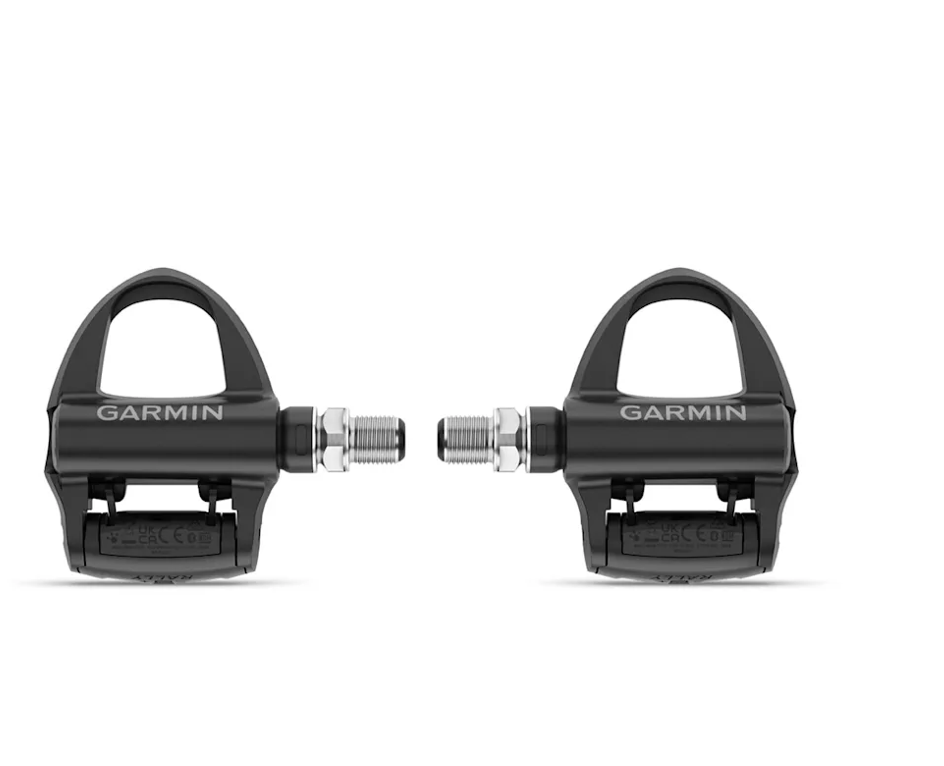
The dual-sensing design gives you left-right balance, seated versus standing time, and power phase data. Its Pedal IQ calibration alerts tell you when a recalibration is due, which helps keep your data consistent across rides. It is also compatible with Shimano SPD-SL cleats.
The main drawback is price. At $899.99, it costs more than the other options in this guide, and you will likely need additional pedal bodies to get the full swapping benefit.
Best for: riders who switch between road and off-road bikes and want detailed pedal dynamics data. Skip if: you ride one bike only and want the lowest upfront cost.
Price of power meter options
The 4iiii Precision 3+ is a left-side power meter fitted to a Shimano 105 complete crankset. Its standout features are battery life, which the manufacturer rates at up to 800 hours, and Apple Find My support, which lets you locate the unit on a map when it is not in use. The power meter is rated at +/-1% accuracy and is IPX7 water-resistant for immersion up to one meter.
The power meter is backed by a 3-year warranty.
Because the power meter sits on one crank arm, it measures single-sided power and estimates the other leg, so it does not give the full left-right breakdown that dual-sensing pedals provide. It is a good match for riders who want a complete crankset with power built in, at $549.99.
Best for: riders who want a ready-to-ride Shimano 105 crankset with long battery life and theft-tracking. Skip if: you need true dual-leg measurement or you want to move the sensor between bikes.
The Quarq DFour DUB Power Meter Spider is a crank-based option at $429.00, and it is spider only, so crank arms and chainrings are sold separately. It has a 110 BCD, 4-bolt configuration and is designed for Shimano DURA-ACE 9100 chainrings. Quarq rates it at +/-1.5% accuracy, measuring both legs at the spider.
Features include MagicZero automatic calibration, 10K temperature compensation, and up to 200 hours of battery life on a user-replaceable CR2032 battery. It supports both ANT+ and Bluetooth. The included warranty is 2 years.
Check compatibility carefully before buying. Check compatibility carefully before buying, as the listing notes it fits SRAM RED, SRAM Force and Quarq DZero 8-bolt crank arms in both DUB and GXP versions. You can view the spider's fitment and compatibility details before ordering. Confirm your crank and bottom bracket first.
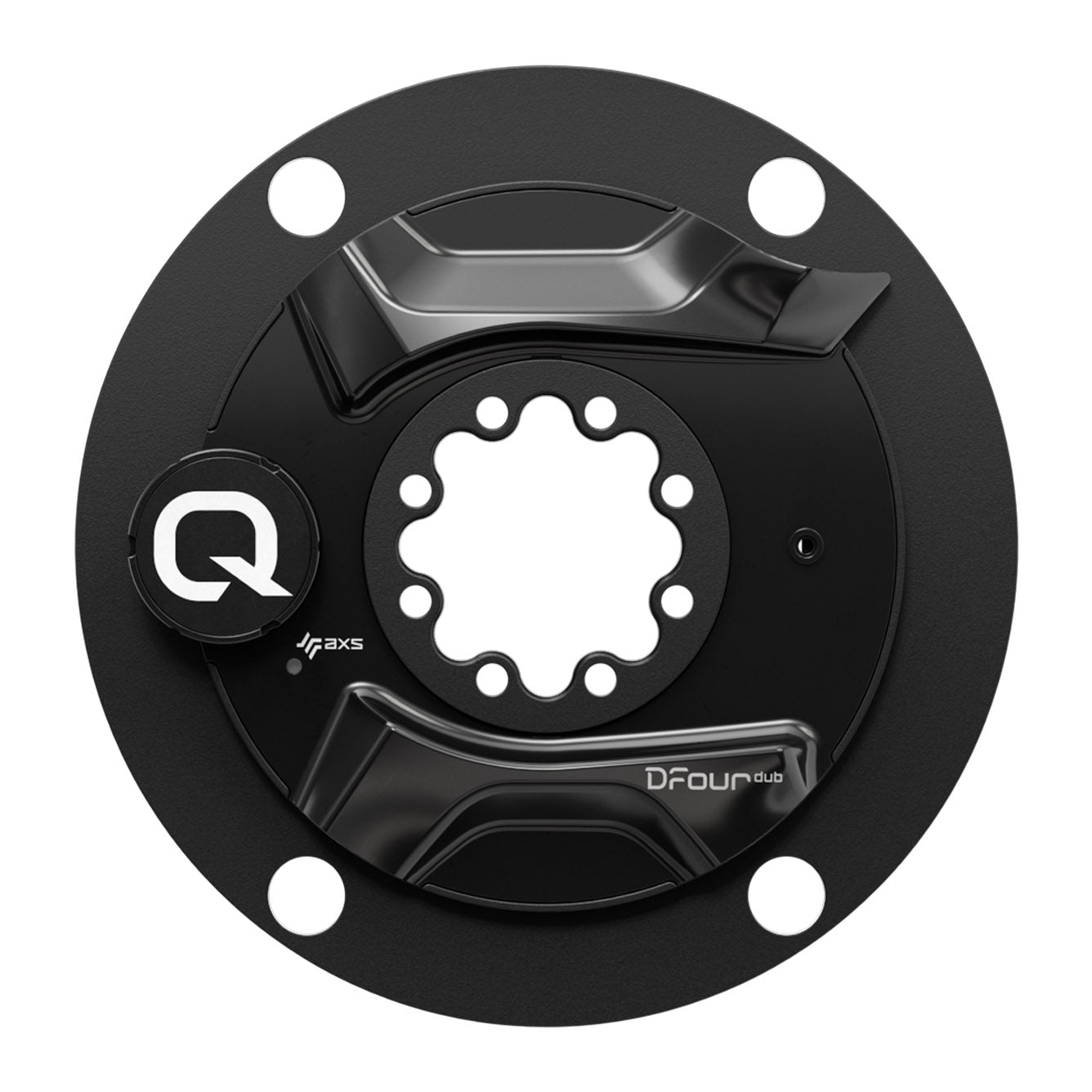
Best for: riders on a DUB-compatible crankset who want a dependable crank-based unit at a mid-range price. Skip if: you have a Shimano crankset without DUB compatibility or want a pedal system you can move between bikes.
Calibration is the step that most often separates trustworthy power data from numbers that look plausible but drift over a season. The practical goal is a repeatable routine you can run in under five minutes before most rides, plus a clear sense of when to stop and recalibrate rather than ride on.
Start with a zero offset check before each ride, following your unit's app or head-unit prompt. Most systems expect the sensor to be unloaded, with the bike stationary and pedals free, so do this before you clip in and before a long warm-up on the road. Record the offset value if your software exposes it.
Next, decide on a calibration cadence based on how you ride. Riders who train in variable temperatures or swap bikes often should recalibrate more frequently than riders who keep one bike in a climate-controlled garage. A common practice is to recalibrate after any significant temperature shift, after a crash or impact, after reinstalling pedals or cranks, and at the start of each training block.
Keep a simple log. Note the date, the ambient temperature, the bike used, and any calibration values. Over a few months this log shows whether your unit is stable or drifting, and it makes it easier to tell a real fitness change from a measurement artifact. Pair it with a periodic coast-down or known-load check on a flat, quiet road if your training plan depends on precise threshold numbers.
Battery and charging deserve attention because a low battery can produce unreliable or dropped data. Check the battery level before long rides and charge according to the manufacturer's guidance rather than letting the unit run flat repeatedly. Some models use user-replaceable coin cells and others use built-in rechargeable batteries that may need service after several years.
Serviceability is part of ownership cost. Pedal bodies and sensors can wear, cleats need replacing, and a damaged sensor may need factory service rather than a home fix. Check the warranty terms and whether your local shop can handle installation, calibration checks, or basic troubleshooting.
Watch out: if a calibration check fails repeatedly, stop trusting the data for threshold or zone decisions until the cause is found, because training based on drifted numbers can push you too hard or too easy for weeks.
Choosing the right power meter is easier when your bike fit is also dialed in. Playtri Sarasota offers Bike Fit services. For ongoing support, our bike repair and service team can help with routine maintenance.
Visit Playtri Sarasota to talk through your training goals and find the power meter pedal setup that fits your bikes.
The Garmin Rally RS210 is one option at $899.99. It is dual-sensing, accurate to within +/- 1 percent, offers up to 90 hours of ride time per charge, and lets you move the power sensor between road and off-road pedal bodies. The 4iiii Precision 3+ Crankset at $549.99 suits riders who want a single-sided crank-based unit with up to 800 hours of battery life and Apple Find My support. Riders on a Shimano or SRAM crankset who want spider-based dual-leg measurement can consider the Quarq DFour at $429.00, which is accurate to +/- 1.5 percent and uses a replaceable CR2032 battery.
Many professional and competitive cyclists train with power meters, and pedal-based units are one of the common options alongside crank-based and spider-based systems. The choice usually comes down to bike setup, how often the rider switches between bikes, and whether they need left-right balance data. At Playtri Sarasota, we help riders compare these systems against their bike and training goals so the chosen unit fits their setup rather than the other way around.
To track power, you need a power meter paired with a compatible head unit, cycling computer or training app. Pedal-based units such as the Garmin Rally RS210 provide power data to compatible devices. After installing the pedals, pair them with your cycling computer, complete a calibration, and check that the readings look reasonable on a short test ride before using them for structured workouts.
They can be, especially if you plan to train with structured workouts or want to measure progress over time. Power meter pedals cost between $429.00 and $899.99 for the units we carry, so they are a meaningful purchase. If you ride mostly for fitness and enjoy riding by feel, a cheaper option may be enough. If you switch bikes often, pedal-based units can move between setups more easily than a crank-based system.


Leave a comment